
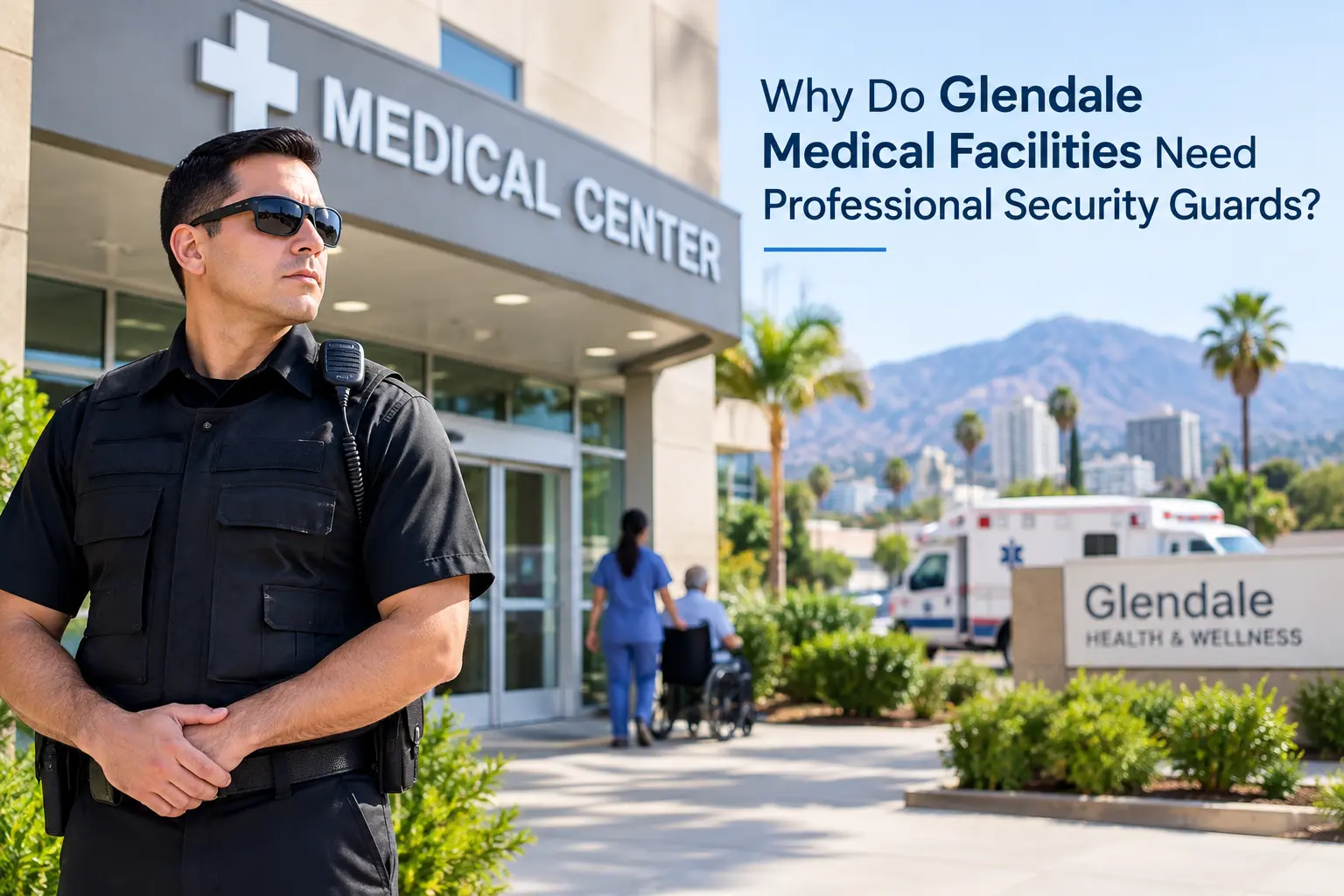
Medical facilities in Glendale can have busy entrances, parking areas, restricted spaces, and frequent activity from patients, visitors, staff, and vendors. Security guards for medical facilities in Glendale can monitor designated areas, control access, patrol the property, and report security concerns while healthcare staff focus on patient care.
Why Do Glendale Medical Facilities Need Security Guards?
Doctors, nurses, and other healthcare employees have their own responsibilities. When a security guard handles property-related security tasks, staff don’t have to leave their primary duties to address every security concern.
Depending on the facility and the post assignment, guards may:
- Monitor entrances and exits
- Keep an eye on parking and exterior areas
- Patrol designated parts of the property
- Watch for suspicious or unauthorized activity
- Check access to restricted areas
- Record and report incidents
- Assist staff when a security issue arises
Define responsibilities before the guard begins work, based on what the property actually needs.
Security Guards for Glendale Hospitals, Clinics, and Medical Offices
Security needs can look very different from one healthcare property to another. Hospitals may have several entrances, busy parking areas, emergency services, restricted rooms, and visitors arriving at all hours. A neighborhood clinic or medical office may have fewer access points and only need security during certain times of the day.
A security guard company in Glendale can review the property’s layout and daily operations with facility management and determine where a guard could be most useful.
For example, a guard might be assigned near a main entrance during busy hours or patrol the property at scheduled times. A smaller medical office could use limited-hour coverage or mobile patrols instead of having a guard present throughout the day. Security guards for medical facilities in Glendale can be assigned based on each property’s size, layout, operating hours, and security needs.
Common Security Concerns at Medical Facilities
Healthcare properties deal with more than just activity inside the building. Security concerns can involve entrances, parking areas, loading areas, exterior walkways, and restricted sections of the facility.
Some issues facility managers may need to address include:
- Unauthorized entry
- Trespassing
- Theft
- Vandalism
- Property damage
- Unauthorized access to employee-only areas
- Suspicious activity around the property
Certain rooms and areas may need closer attention than others. Storage areas, equipment rooms, administrative offices, and other restricted spaces may contain property or information that should not be accessible to everyone.
A security guard can monitor these locations as part of the facility’s established security procedures and report concerns to the appropriate personnel.
Why Parking Areas Matter
The parking area is part of the property too, but it’s easy to overlook when security planning focuses mainly on the building.
Patients may arrive before an appointment, visitors may leave after dark, and employees may park away from the main entrance. Larger medical facilities may have parking structures or lots that are some distance from the building.
Regular patrols can give these areas some attention rather than leaving them unchecked for long periods. A guard may notice damaged property, unauthorized activity, or other concerns and report them to facility management.
These patrols can also identify practical issues that need attention, such as poorly lit areas, blocked access points, or sections of the parking area that are difficult to observe.
Security During After-Hours Operations
Medical facilities do not all follow a traditional 9-to-5 schedule. Hospitals may operate continuously, while urgent care centers, laboratories, specialty practices, and other healthcare businesses may stay open in the evenings or early mornings.
The property can look very different once the daytime crowd has gone home. Fewer employees and visitors may be around, while certain entrances, parking areas, or exterior spaces remain in use.
Depending on the facility’s schedule, security coverage can be arranged for specific shifts or through scheduled mobile patrols. This lets management focus coverage when it is most useful, rather than using the same schedule every day.
On-Site Security Guards vs. Mobile Patrol
No single security arrangement works for every medical property. On-site security guards stay at the facility during their assigned shift. This can make sense for locations with steady visitor activity, busy entrances, or areas that need continuous attention.
Mobile patrols work differently. A patrol officer visits the property at scheduled times, checks designated areas, and reports anything that requires attention. This can be useful for smaller properties or locations that do not require a guard to remain on-site throughout the day.
The best option depends on the property’s size, operating hours, visitor activity, layout, and specific security concerns.
Working With Facility Management
Good communication between the security team and facility management is important.
Before a security guard starts, management should explain which entrances, restricted areas, parking locations, and other parts of the property require attention. It is also important to establish who to contact if an incident occurs.
This gives the guard a clear understanding of the assignment and gives facility staff a defined process for handling reported concerns.
Security arrangements may also need to change over time. A renovation can create a new entrance, construction can alter access around the property, or a change in operating hours can create a need for coverage at different times.
How Should a Glendale Medical Facility Choose Security Services?
Before hiring security guards in Glendale, take a practical look at the property.
Consider when the facility is busiest, where visitors enter, how employees access the building, where patients park, which areas are restricted, and whether there have been previous security concerns.
When comparing security guard services in Glendale, facility managers may want to ask about:
- Guard training and experience
- On-site security coverage
- Mobile patrol availability
- Assigned guard duties
- Incident reporting
- Communication with management
- Scheduling options
When speaking with a security company, explain what is happening at the property instead of simply asking for a standard security package. A company that understands the facility’s layout and operating schedule can provide a more appropriate coverage plan.
Frequently Asked Questions
Not every medical office requires the same type of security. A practice with extended hours, frequent visitors, valuable equipment, or specific property concerns may find security coverage useful.
Their duties can include monitoring designated areas, checking access points, patrolling the property, documenting incidents, and reporting security concerns according to the facility’s procedures.
Yes. Small clinics can also hire security around their operating hours and property needs. Limited-hour on-site coverage or scheduled mobile patrols may work when a full-time guard isn’t needed.
Yes. Scheduled mobile patrols allow an officer to visit and check designated areas without requiring a guard to remain at the property all day.
Start with the property’s actual security needs, including operating hours, entrances, parking, restricted areas, and previous concerns. Then compare security companies based on training, experience, coverage options, reporting, and communication.
Security for Glendale Medical Facilities
Hospitals, clinics, and medical buildings may have their own security concerns based on how the property is used each day. Having trained security personnel handle assigned duties lets healthcare employees focus on patients and their regular responsibilities.
Some facilities may need an on-site guard, while others may only need scheduled patrols or coverage during certain hours.
First Guardian Security provides security services for commercial and other properties throughout Los Angeles County, with coverage based on each property’s needs and operating schedule.
Looking for security guards for medical facilities in Glendale? Contact First Guardian Security to discuss your security needs and request a security quote.