
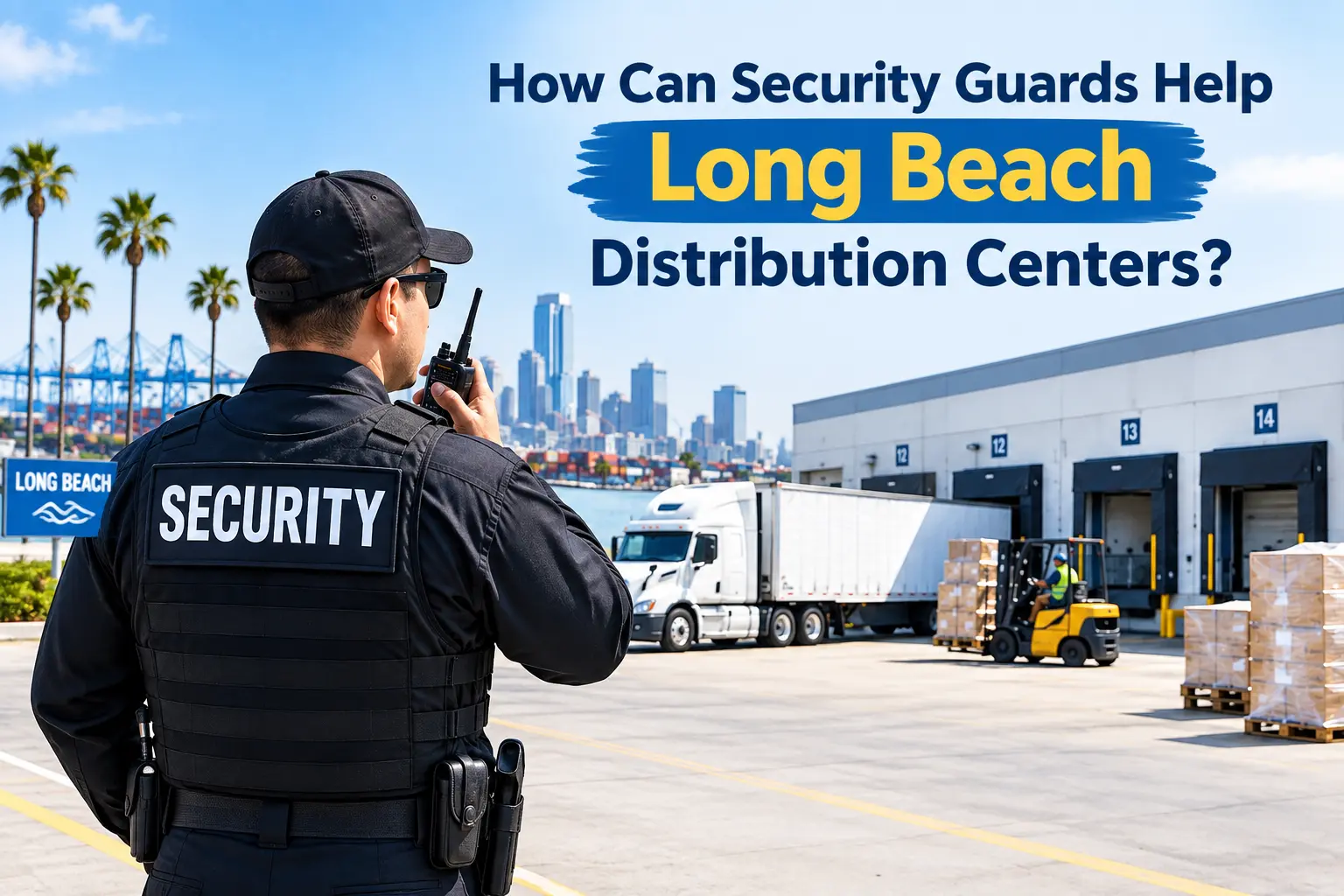
Long Beach is a major logistics and freight hub, and distribution centers here can stay busy from early morning through late at night. Trucks arrive for deliveries, drivers check in, employees change shifts, inventory moves through loading docks, and trailers may remain on the property between shipments.
With so much activity happening at the same time, security can be difficult for warehouse and distribution center staff to manage on their own.
Security guards help Long Beach distribution centers by controlling access, monitoring loading and shipping areas, patrolling the property, deterring theft and unauthorized activity, protecting vehicles and trailers, and responding to security concerns during operating and after-hours periods.
The right security plan depends on the facility’s layout, traffic, operating schedule, and specific risks.
Why Do Long Beach Distribution Centers Need Security Guards?
Distribution centers have a different security environment from a typical office or retail property. Employees, delivery drivers, contractors, vendors, and visitors may enter and leave throughout the day, while trucks and trailers are constantly moving around the property.
Long Beach’s connection to regional freight and transportation networks adds to that activity. Many local distribution and logistics facilities operate within a larger freight network connected to the Port of Long Beach.
As a result, truck entrances, loading docks, trailer yards, parking areas, and exterior access points are key parts of a facility’s overall security plan.
A security guard provides an on-site presence that helps management monitor these areas while employees focus on warehouse and logistics operations.
1. Control Access to the Facility
Distribution centers can have several access points, and not everyone arriving at the property should necessarily have unrestricted access. A security officer can monitor entrances, verify visitors or drivers per the facility’s procedures, and direct authorized traffic to the appropriate area.
Depending on the property’s requirements, access-control duties may include:
- Checking identification or credentials
- Confirming visitor or contractor information
- Monitoring employee entrances
- Recording vehicle or visitor activity
- Directing delivery drivers
- Watching for unauthorized access
- Reporting unusual activity to management
This can be particularly helpful at facilities where several transportation companies, contractors, or vendors arrive throughout the day.
2. Monitor Loading Docks and Shipping Areas
Loading docks are among the busiest parts of a distribution center. Employees are moving merchandise, trucks are being loaded or unloaded, and drivers may be entering areas with restricted access.
Because of the constant movement, unusual activity can sometimes be difficult for warehouse employees to notice.
Security personnel can provide an additional set of eyes around loading and shipping areas.
For example, they may notice someone who does not belong in a restricted area, a vehicle parked where it should not be, an unsecured exterior door, or activity around a trailer that requires attention.
The goal is not to slow down warehouse operations. Instead, security coverage should fit into the facility’s normal workflow and provide oversight where it is most useful.
3. Deter Theft and Unauthorized Activity
A visible security presence can discourage people from attempting unauthorized activity on the property.
Distribution centers may contain valuable merchandise, equipment, vehicles, and other assets. Some areas, such as trailer yards, perimeter fencing, employee parking, and exterior storage spaces, may receive less attention when warehouse employees are busy inside.
Regular security patrols can help keep these areas under observation.
Depending on the security plan, patrols may cover:
- Property perimeters
- Fences and gates
- Trailer parking areas
- Employee parking
- Loading and unloading zones
- Exterior doors
- Storage areas
- Less-trafficked parts of the property
A guard who regularly checks these locations can identify unusual conditions and report them before they develop into larger problems.
4. Protect Trucks, Trailers, and Equipment
Security concerns at a distribution center do not end when inventory is inside the warehouse.
Trucks, trailers, company vehicles, forklifts, containers, and other equipment may remain outside for extended periods. Some facilities also have trailers waiting for scheduled pickups or deliveries.
Mobile or on-site patrols can provide additional oversight of these areas.
For example, a guard may check whether gates are secured, observe activity around parked trailers, or report an unfamiliar vehicle that appears out of place.
For facilities with significant overnight activity or equipment left on-site, this additional layer of security can be especially useful.
5. Provide Security During Shift Changes
Shift changes can create a temporary increase in activity around a distribution center. Employees may arrive and leave at the same time, delivery drivers may be checking in, and supervisors may be dealing with several operational tasks at once.
These periods can make it harder to keep track of everyone moving through the property. Security personnel can focus on access points and exterior activity during busy periods while warehouse management concentrates on operations.
Coverage can also be scheduled around the facility’s actual traffic patterns rather than assuming every hour presents the same level of risk.
6. Provide Overnight Security
Many Long Beach distribution centers operate beyond traditional business hours. Some run multiple shifts, while others receive trucks or conduct shipping activity early in the morning or late at night. Once staffing levels decrease, there may be fewer employees available to notice something unusual around the property. Overnight security can help maintain a visible presence during these quieter periods.
Depending on the assignment, overnight duties may include:
- Monitoring entrances and exits
- Conducting scheduled or random patrols
- Checking exterior doors and gates
- Observing parking and trailer areas
- Reporting suspicious activity
- Documenting incidents
- Following established emergency procedures
The coverage can be adjusted to match the facility’s operating schedule and security needs.
7. Respond to Alarms and Security Concerns
When an alarm sounds or an employee reports a security concern, someone needs to assess the situation and follow the property’s response procedures. Depending on the assignment and the guard’s authority, security personnel may check the affected area, observe conditions, notify management, document what happened, and contact emergency services when appropriate.
Examples of situations that may require attention include:
- A triggered alarm
- An open or damaged gate
- Signs of attempted entry
- An unfamiliar person in a restricted area
- A vehicle in an unauthorized location
- Damage to fencing or property
- Suspicious activity around trailers
Having established procedures in place helps employees know who to contact and what steps should be followed when something goes wrong.
8. Give Employees and Drivers a Clear Security Contact
Security is not only about preventing theft. An employee may see someone they do not recognize. A driver may need help locating the correct entrance. A contractor may arrive outside the expected schedule. A warehouse employee may notice a damaged gate or another issue that needs to be checked.
Having a security officer on-site gives employees, drivers, contractors, and visitors a clear point of contact for security-related concerns.
That can be particularly valuable at larger distribution centers where multiple people and companies share the same property.
9. Help Keep the Property Organized and Secure
Security personnel can also contribute to a more controlled environment around the facility. By monitoring access points, directing visitors, observing exterior areas, documenting incidents, and communicating concerns to management, guards can support the property’s existing security procedures.
They do not replace warehouse supervisors, safety personnel, facility managers, or law enforcement. Instead, they provide an additional layer of security and observation. This distinction is important. Effective distribution center security is about creating a system in which people, procedures, and physical security measures work together.
What Security Coverage Does a Long Beach Distribution Center Need?
There is no single security setup that works for every distribution center. A smaller facility may need overnight coverage and periodic patrols. A large logistics property with several entrances, loading docks, parking areas, and trailer yards may require continuous on-site security supported by mobile patrols.
Before choosing a security plan, property managers should consider:
- How many entrances and exits does the property have?
- How many trucks arrive and leave each day?
- Are trailers stored overnight?
- Where is valuable inventory or equipment located?
- Does the facility operate 24/7?
- When are shift changes busiest?
- Are there areas with limited visibility?
- Has the property experienced theft, trespassing, or other security concerns?
- Which areas require regular patrols?
These questions can help determine where security personnel can provide the greatest value.
Frequently Asked Questions
They control access, monitor loading areas, patrol the property, deter theft, and respond to security concerns.
Yes, especially when inventory, trailers, vehicles, or equipment remain on-site after hours.
Yes. Guards can monitor truck entrances, trailer yards, loading docks, and other exterior areas.
Common areas include entrances, loading docks, parking lots, trailer yards, gates, fences, and exterior doors.
Consider your facility’s size, hours, truck traffic, access points, and security concerns, then choose coverage that fits those needs.
Choosing Security Guards for a Long Beach Distribution Center
A distribution center needs a security approach that reflects its actual operations. A guard assigned to a warehouse should understand the importance of access points, loading areas, vehicle traffic, employee entrances, trailer storage, and after-hours activity.
When evaluating a security provider, ask how the company would approach your specific property rather than simply asking how many guards it can provide. A good security plan should establish clear responsibilities, post orders, communication procedures, patrol expectations, incident reporting, and escalation protocols.
For facilities that need coverage beyond a fixed entrance, on-site security and mobile patrol services can also be combined to provide a broader presence across the property.
Final Thoughts
Security guards can play an important role in protecting Long Beach distribution centers. They can help control access, monitor loading docks, patrol truck and trailer areas, deter unauthorized activity, provide overnight coverage, and respond to security concerns.
For a busy logistics property, the most effective approach is not simply placing a guard at the front entrance. Security should be built around how the facility operates, where people and vehicles move, when the property is busiest, and which areas need additional attention.
If your distribution center needs additional security coverage, a professional security guard company in Long Beach can evaluate the property and help determine whether on-site guards, mobile patrols, overnight coverage, or a combination of services makes sense for your operation.
Contact the First Guardian Security now to discuss your security needs.