
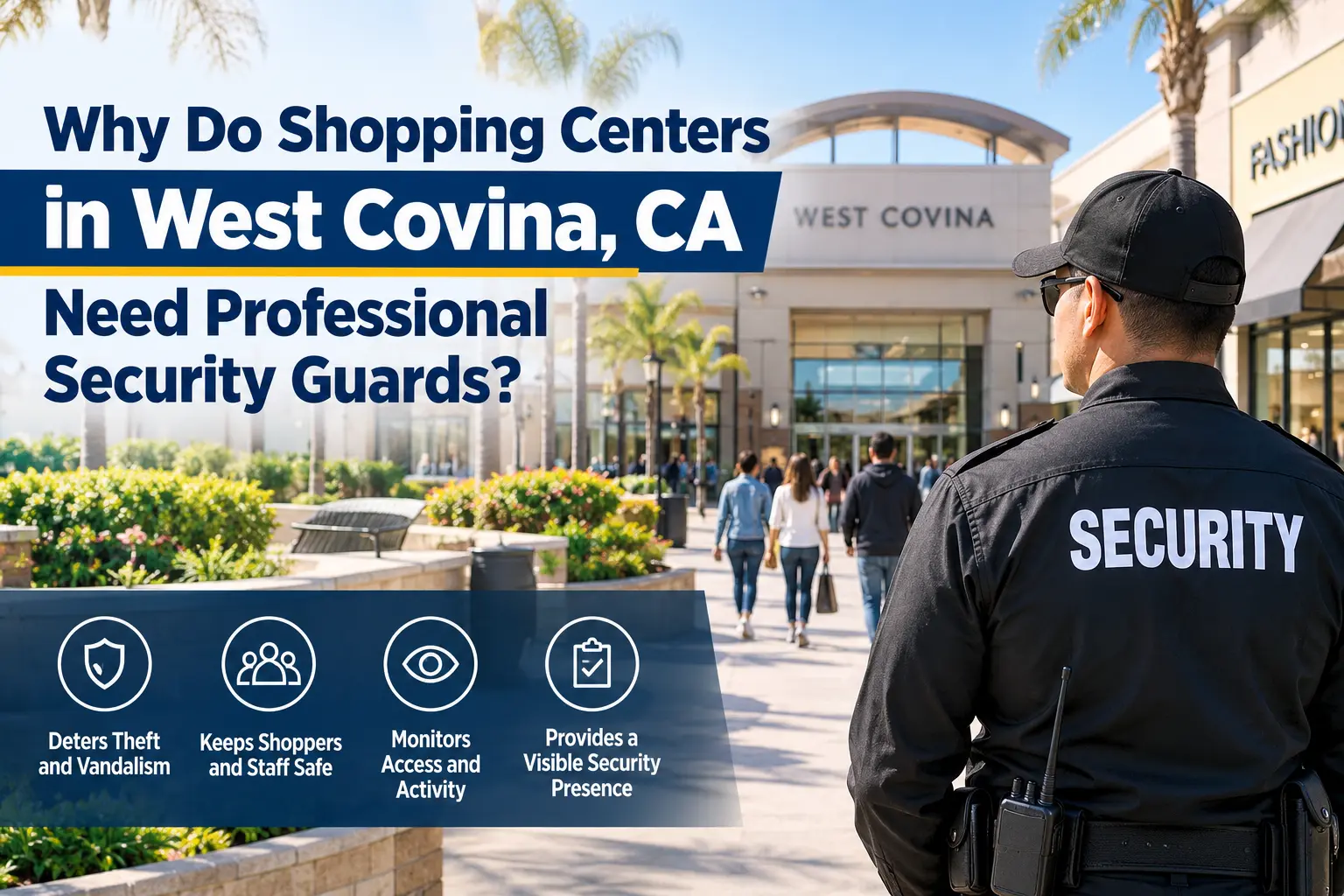
Professional security guards for shopping centers in West Covina, CA, help monitor entrances, oversee parking areas, manage access where needed, identify potential security concerns, and respond to incidents. With shoppers, employees, and delivery drivers moving throughout the day, a security plan tailored to the property’s layout and daily operations helps maintain an orderly environment for tenants, customers, employees, and visitors.
Why Shopping Center Security Matters in West Covina
Shopping centers have several areas that need attention, from store entrances and pedestrian walkways to parking lots, loading zones, and less-frequently used sections of the property. Each area presents different operational concerns.
A retail center near West Covina’s main commercial corridors may experience changing traffic patterns throughout the day. Weekend shopping, seasonal promotions, restaurant activity, and evening business hours can also affect how people move through the property.
Security needs can vary from one shopping center to another. A property with several entrances, shared parking areas, and restaurants that stay open late may need a different coverage plan from a smaller retail center that closes earlier.
5 Ways Security Guards Help Protect Shopping Centers
1. Monitoring Parking Lots and Pedestrian Areas
Parking areas are an important part of shopping center security. Vehicles and pedestrians share space, customers carry purchases to their cars, and drivers move between entrances, parking spaces, and access roads.
Parking lot security guards can patrol designated areas, observe unusual activity, report hazards, and, when appropriate, help direct visitors. They can help property managers identify concerns that may otherwise go unnoticed between routine inspections.
2. Helping Deter Theft and Suspicious Activity
A theft concern can affect more than the store where it happens. Shopping center managers also need a clear way to report incidents, share relevant information with tenants, and decide when additional assistance is needed. Security guards can help by observing activity, documenting what they see, and following the property’s procedures.
Retail security guards can monitor shared areas, watch designated entrances, document incidents, and contact store management or law enforcement when appropriate. Their responsibilities should be clearly defined, including how they handle suspected theft, disputes, and requests for assistance.
3. Supporting a Safer Experience for Shoppers and Employees
Customers expect to move through a shopping center without unnecessary disruption. Employees need to enter and leave work, while property teams must coordinate deliveries, maintenance, and other daily activities.
On-site security guards can provide a visible point of contact for reporting concerns, help visitors with basic directions, monitor common areas, and escalate emergencies per site procedures. Their presence may also help staff feel more prepared to report problems.
Security personnel do not replace emergency responders or medical professionals. Their role is to follow the property’s response plan, communicate clearly, and seek appropriate assistance when a situation requires it.
4. Monitoring Deliveries, Service Entrances, and Restricted Areas
Shopping centers often have operational areas that customers do not normally use. These may include loading docks, maintenance rooms, storage areas, employee entrances, and service corridors.
Commercial security guards can monitor designated access points, verify authorization according to site procedures, record relevant activity, and report attempts to enter restricted spaces. These measures are especially useful when multiple tenants, contractors, vendors, and delivery teams share the same property.
Property managers should identify which areas require access controls and give guards clear instructions for handling visitors, deliveries, and unexpected access requests.
5. Providing Coverage Outside Peak Shopping Hours
Security needs do not end when customer traffic decreases. After stores close, shopping centers may still have cleaning crews, maintenance workers, late-operating restaurants, delivery activity, or contractors on-site.
After-hours shopping center security can include exterior checks, monitoring designated entrances, observing parking areas, and documenting unusual conditions. Depending on the property, management may choose stationary guards, mobile patrol security services, or a combination of both.
The right approach depends on the shopping center’s size, operating hours, layout, known concerns, and budget. A site assessment can help determine whether continuous on-site coverage or scheduled patrols better fit the property’s needs.
On-Site Security Guards vs. Mobile Patrols for Shopping Centers
Not every shopping center needs the same type of coverage. Some retail sites need a guard stationed at a main entrance, while others may benefit more from patrols that check parking areas and building exteriors at agreed intervals. The choice comes down to the property’s layout, operating hours, and specific concerns.
On-site security guards are useful when a property needs a consistent security presence at a particular entrance, service area, or other designated location. They can monitor assigned areas, communicate with management, and follow site-specific procedures throughout their shift.
Mobile security patrols check designated sections of a property. They may suit locations where management wants periodic exterior inspections or overnight patrols without assigning a guard to one fixed post for the entire shift.
Some properties may benefit from combining both approaches. For example, a shopping center could require an on-site guard during busy operating hours and scheduled mobile patrols after closing in selected areas. Coverage should be determined through an assessment, not a one-size-fits-all recommendation.
Choosing a Shopping Center Security Company in West Covina, CA
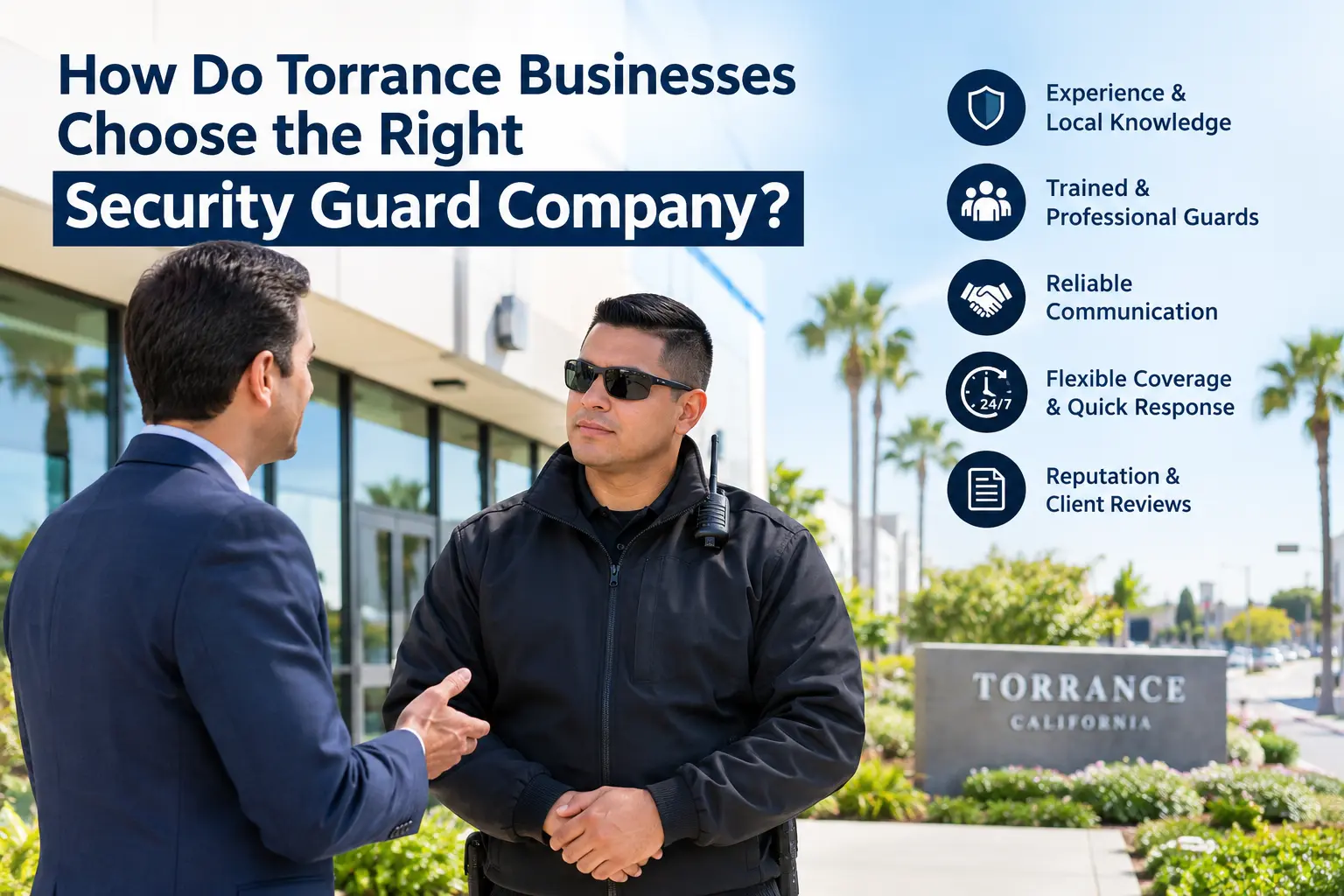
Price matters, but it should not be the only factor when choosing a shopping center security company in West Covina. Ask who will supervise the guards, how incidents will be reported, what areas will be covered, and how the provider will handle changes in your operating schedule. Clear answers make it easier to compare proposals and choose coverage that fits your property.
Consider these factors when evaluating commercial security guards in West Covina:
- Licensing and compliance: Confirm that the provider holds the required California licenses and meets applicable requirements.
- Relevant experience: Ask about experience with retail properties, parking facilities, multi-tenant sites, and after-hours operations.
- Customized coverage: Make sure the proposed plan reflects the property’s entrances, parking areas, operating hours, and specific concerns.
- Incident reporting: Ask how guards document incidents, communicate urgent concerns, and coordinate with property management.
- Supervision and communication: Understand how shifts are monitored, how issues are escalated, and whom the property manager can contact.
- Clear service expectations: Review assigned duties, patrol frequency, staffing arrangements, and any exclusions before signing an agreement.
The security plan should also account for changes in store hours, deliveries, tenant needs, and activity after closing.
Build a Security Plan Around Your Shopping Center
The right security arrangement starts with understanding what happens at your shopping center each day. Busy parking areas, multiple tenants, delivery schedules, and after-hours activity all affect where guards are needed and what they should be responsible for. A plan built around these details is more useful than a standard package applied to every property.
Frequently Asked Questions
Depending on the property’s layout and operating requirements, shopping centers may need on-site security guards, parking lot patrols, monitoring of designated entrances, loading-area checks, or after-hours mobile patrols. A site assessment can help determine the appropriate combination.
Mobile security patrols may suit shopping centers that need periodic checks of parking areas, building exteriors, service entrances, or other designated locations. Patrol frequency and coverage should be agreed upon based on the property’s needs and service plan.
Yes. Assigned guards can observe parking areas, report suspicious activity, identify hazards, and follow procedures for incidents involving vehicles or pedestrians. Their duties depend on the scope of the security agreement.
After-hours coverage may be useful when a property has late-operating businesses, cleaning crews, maintenance work, deliveries, or equipment that requires monitoring. Management should evaluate access points, operating schedules, and site-specific concerns before choosing a coverage plan.
Managers should verify California licensing, review relevant commercial security experience, compare proposed coverage plans, and ask about supervision, incident reports, communication, and staffing. The selected provider should be able to explain how its services will address the property’s specific requirements.
Request Shopping Center Security Service
First Guardian Security provides security services for commercial properties. If you manage a shopping center, retail complex, or commercial property in West Covina, our team can discuss your coverage requirements and help you explore a suitable security plan.
Whether you need on-site security guards, mobile patrol security services, or after-hours property checks, the right arrangement should reflect your location, operating schedule, and security priorities.
Contact First Guardian Security at (800) 880-3002 to discuss your shopping center security needs and request a quote.